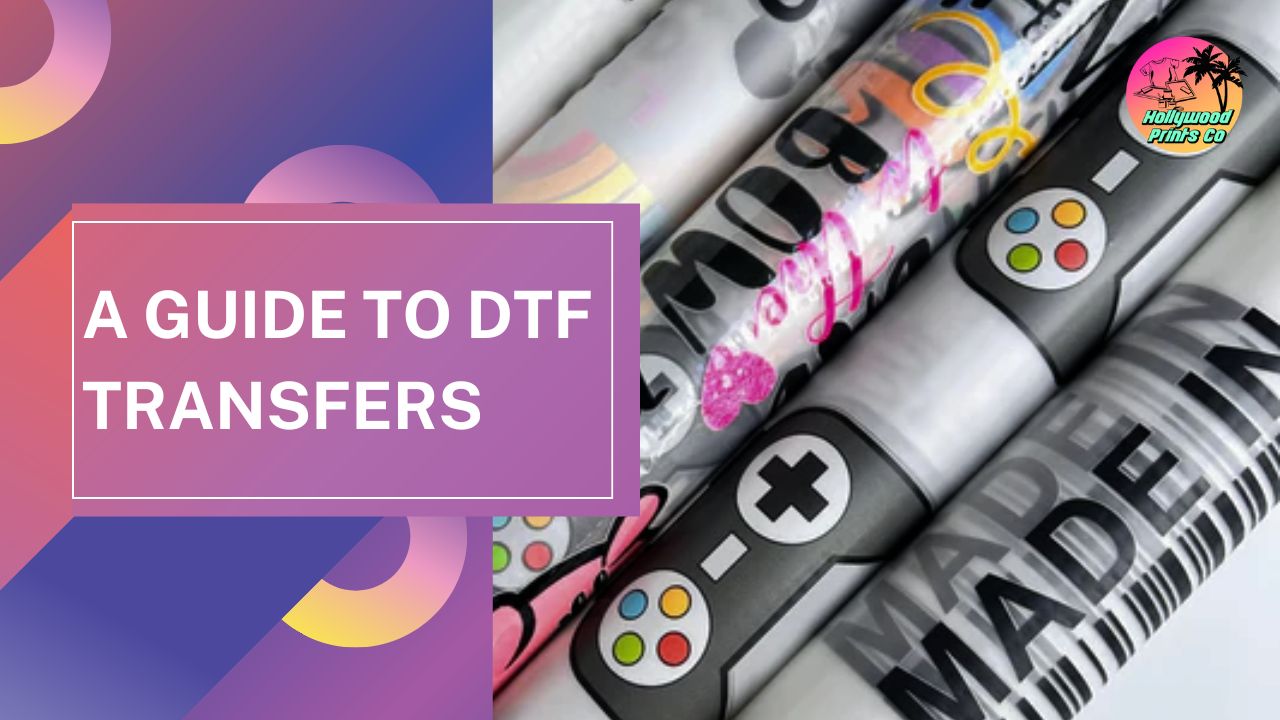
Welcome to Hollywood Prints, your go-to resource for DTF transfers! If you’re curious about direct to film (DTF) transfers, you’ve come to the right place. This comprehensive guide covers everything you need to know about DTF printing, including the materials for DTF transfers, the advantages of these transfers, equipment requirements, and we show how beneficial they are for creating custom apparel.
Whether you’re an expert or new to the field, we provide valuable insights and practical tips to help you navigate DTF printing seamlessly. By the end of this guide, you’ll have a clear understanding of DTF transfers and whether they align with your project needs.
Let’s delve into the world of DTF printing together!
Table of Contents
-
Introduction to DTF Transfers
-
What Are DTF Transfers?
-
Materials Used in DTF Transfers
-
PET Film
-
DTF Inks
-
Adhesive Powder
-
-
DTF Transfer Printing Process
-
Step 1: Designing Transfer
-
Step 2: Printing on PET Film
-
-
Curing the Design for DTF Transfers
-
Apply Adhesive Powder
-
Melting and Curing Powder
-
Ensuring Proper Adhesion
-
-
DTF Transfer Application and Benefits
-
Transferring the Design
-
Step-by-Step Transfer Process
-
-
Advantages of DTF Transfers
-
FAQs About DTF Transfers
-
Conclusion for Hollywood Prints’ DTF Transfer
-
DTF Transfers Testimonials (For those looking to get DTF transfers printed out)
-
Future of DTF Printing
-
Start Your DTF Journey Today
Introduction to DTF Transfers
Direct-to-Film (DTF) transfers represent a revolutionary printing technology that allows for the transfer of high-quality designs onto various fabrics. Unlike traditional methods, DTF transfers use a special film that facilitates the printing and transfer process. This method is gaining popularity due to its ability to produce vibrant, durable, and versatile prints, suitable for both commercial and personal applications.
The DTF process involves printing a design onto a PET film, coating it with adhesive powder, curing it, and then transferring it onto the desired fabric using a heat press. The ability to produce detailed, high-resolution prints on a variety of materials, including those that are heat-sensitive, makes DTF an attractive option for many users. Whether you’re a business owner looking to expand your product offerings or a hobbyist wanting to create custom apparel, understanding DTF transfers is crucial.
What are DTF Transfers?
DTF transfers involve printing a design onto a polyethylene terephthalate (PET) film using specialized DTF inks. The printed design is then coated with an adhesive powder, cured, and transferred to fabric using heat. This method is distinct from others, such as screen printing or heat transfer vinyl (HTV), primarily due to its versatility and quality.
Compared to other methods, DTF offers greater flexibility, the ability to handle intricate designs, and superior durability. It allows for high-quality prints on a wider range of materials, making it a preferred choice for detailed artwork and complex graphics. The combination of advanced technology and high-quality materials ensures that DTF transfers stand out in the competitive world of custom printing.
Materials Used in DTF Transfers
PET Film
PET film acts as the medium onto which the design is printed. It is crucial for maintaining the integrity and quality of the design during the transfer process. This film is specifically designed to withstand the high temperatures and pressures required during the transfer, ensuring a smooth and accurate print. The transparency and durability of PET film make it ideal for DTF printing.
DTF Inks
DTF inks are specifically formulated for printing on PET film. These inks are designed to bond well with the film and fabric during the transfer process. They offer vibrant colors and excellent durability, ensuring that the transferred designs remain intact and visually appealing over time. Different types of DTF inks are available, each suited for various applications and fabric types. The ink properties are critical for achieving high-resolution prints that stand out in terms of color and detail.
Adhesive Powder
The adhesive powder is applied to the printed design on the PET film. It helps in bonding the design to the fabric when heat is applied. Different adhesive powders are available, each suited for specific fabric types and transfer conditions. The choice of powder can affect the durability and feel of the final print. This adhesive ensures that the design stays firmly attached to the fabric, even after multiple washes and extended use.
The Printing Process
Step 1: Designing the Transfer
Designing for DTF transfers involves using graphic design software such as Adobe Illustrator (AI) and Encapsulated PostScript (EPS) files. These formats ensure high-quality designs that can be accurately reproduced. The design process is crucial as it sets the foundation for the final print’s quality and detail. Using these software tools allows for precision and creativity, ensuring that the design is ready for the printing process.
Step 2: Printing on the PET Film
The printing process requires DTF printers, which are designed to handle the unique properties of DTF inks and PET film. The quality of the ink and film used is critical for achieving vibrant, durable prints. High-quality materials ensure better adhesion and longevity of the design, making the investment in good-quality equipment and supplies worthwhile. The use of specialized printers and high-quality materials ensures that the prints are clear, vibrant, and durable.
Curing the Design
Applying Adhesive Powder
The adhesive powder must be applied evenly to ensure proper bonding. Techniques such as shaking and spreading the powder can help achieve an even coat. Ensuring that the powder is evenly distributed across the design is crucial for achieving high-quality results. This step is essential for ensuring that the design adheres properly to the fabric during the transfer process.
Melting and Curing the Powder
Once the adhesive powder is applied, it needs to be melted and cured. This can be done using heat presses or curing ovens. The curing process is vital as it ensures the adhesive bonds properly with the ink and fabric, leading to a durable print that withstands washing and wear. Proper curing is critical for ensuring that the design remains intact and vibrant over time.
Ensuring Proper Adhesion
Proper curing techniques are essential to ensure the adhesive bonds the design to the fabric effectively, preventing issues like peeling or cracking. Using the correct temperature and timing for curing will significantly impact the transfer’s durability and overall quality. Proper adhesion ensures that the design remains firmly attached to the fabric, even after multiple washes and extended use.
Transfer Application and Benefits
Transferring the Design
The heat press plays a crucial role in transferring the design from the PET film to the fabric. The appropriate time and temperature settings are vital for a successful transfer. These settings can vary based on the fabric and adhesive used, and it’s important to follow the manufacturer’s guidelines for best results. Using a heat press ensures that the design is transferred accurately and efficiently.
Step-By-Step Transfer Process
The process involves positioning the PET film with the printed design on the fabric and applying heat and pressure using a heat press. The pressing time and temperature are critical factors that influence the quality of the transfer. It is essential to ensure even pressure and correct temperature settings to achieve a perfect print. This step is crucial for ensuring that the design is transferred accurately and efficiently.
1. Peeling the Film
Depending on the type of adhesive and fabric, the film can be peeled either hot or cold. Each method has its advantages and specific use cases. Hot-peel methods involve removing the film while it’s still warm, which can be faster and often easier. Cold-peel methods require the film to cool down before peeling, which can result in a slightly different finish. The peeling method can impact the final appearance and feel of the print, so it’s important to choose the right method for each project.
2. Second Press for Durability
A second press ensures the design is fully adhered to the fabric, enhancing the durability of the transfer. This step involves pressing the fabric again after peeling the film, usually with a protective sheet on top, to ensure the print is well-set and to improve its washability and longevity. This step is critical for ensuring that the design remains intact and vibrant over time.
3. Techniques for Optimal Design
Proper techniques for the second press can significantly improve the quality and longevity of the print. Using a Teflon sheet or parchment paper between the heat press and the fabric can help protect the design and ensure even heat distribution. These techniques ensure that the design is firmly attached to the fabric and can withstand repeated use and washing.
Advantages of DTF Transfers
Versatility of DTF Transfer
DTF transfers can be used on various materials, including cotton, polyester, nylon, and leather, making them highly versatile. This versatility allows for a wide range of applications, from custom apparel to accessories and promotional items. The ability to print on a variety of materials makes DTF transfers an excellent choice for a wide range of projects.
Durability and Washability
DTF prints are known for their durability, resisting fading and cracking even after multiple washes. This makes them an excellent choice for items that need to withstand frequent use and laundering, such as t-shirts, uniforms, and sportswear. The durability of DTF prints ensures that they remain vibrant and intact over time, even with repeated use.
High Print Quality
DTF transfers can produce intricate designs with vibrant colors, making them ideal for detailed artwork and complex graphics. The high-resolution prints ensure that even the smallest details are accurately reproduced, providing a professional and polished look. The high print quality of DTF transfers makes them an excellent choice for a wide range of projects.
Conclusion
Direct-to-Film (DTF) transfers offer a revolutionary approach to custom printing, providing high-quality, durable, and versatile prints. The detailed process, from designing and printing on PET film to applying adhesive powder and transferring the design using a heat press, ensures that the final product is of the highest quality. The materials used, including PET film, specialized DTF inks, and adhesive powder, are critical for achieving vibrant, long-lasting prints. DTF transfers stand out for their versatility, durability, and ability to produce intricate designs with vibrant colors.
Whether you’re a business owner looking to expand your product offerings or a hobbyist wanting to create custom apparel, understanding and utilizing DTF transfers can significantly enhance your projects. The combination of advanced technology and high-quality materials ensures that DTF transfers stand out in the competitive world of custom printing. With the ability to print on a variety of materials and create high-quality, durable designs, DTF transfers are an excellent choice for anyone looking to create custom apparel and accessories.
Customer Testimonials for Hollywood Prints’ DTF Transfers
At Hollywood Prints, we take pride in delivering top-quality DTF transfers that exceed our customers’ expectations. Here are a couple of customer testimonials that should help you decide where to get your DTF transfers:
I recently switched to Hollywood Prints’ DTF transfers, and I am absolutely blown away! The colors are vibrant, the detail is incredible, and the durability is unmatched. My clients have been thrilled with the results, and so have I. Hollywood Prints truly delivers on quality every time!
Sarah M.
Hollywood Prints’ DTF transfers have been a game-changer for my business. The prints are stunning, with sharp details and rich colors that make every design pop. The transfers adhere perfectly to a variety of fabrics, and they hold up exceptionally well after multiple washes. I couldn’t be happier with the quality and consistency. Thank you, Hollywood Prints!
Mark T.
These testimonials highlight the positive experiences of our customers who have embraced DTF printing with the help of Hollywood Prints. From superior print quality to excellent customer service, we strive to deliver exceptional results that inspire confidence and satisfaction in our clients.
The Future of DTF Printing and Its Rising Popularity
As the printing industry continues to evolve, DTF printing is emerging as a game-changer with promising prospects for the future. The versatility, efficiency, and exceptional print quality offered by DTF technology position it as a frontrunner in the world of printing. Here’s why its popularity is on the rise:
Advancements in Technology:
- DTF printing technology is evolving rapidly, promising better print quality, speed, and reliability.
- Expect more impressive features and capabilities from DTF printers in the future.
Expansion of Applications:
- DTF printing can be used on various substrates, from apparel to signage, opening up new possibilities.
- We’ll see DTF printing applied in more industries as its versatility becomes better known.
Growing Demand for Customization:
- Consumers love personalized products, and DTF printing offers the ability to create custom designs quickly and affordably.
- Businesses are adopting DTF printing to meet the demand for unique and personalized items.
Sustainability and Eco-Friendly Solutions:
- DTF printing has environmental benefits, including reduced ink wastage and the ability to print on eco-friendly substrates.
- As sustainability becomes more important, DTF printing will continue to gain traction as an eco-friendly option.
Accessibility and Affordability:
- DTF printing is becoming more accessible to businesses of all sizes, thanks to lower costs and easier-to-use technology.
- Expect DTF printing to become even more affordable and widespread in the future.
In summary, the future of DTF printing is bright, with advancements in technology, expanding applications, growing demand for customization, sustainability considerations, and increased accessibility driving its popularity.
Start Your DTF Journey Today
In today’s dynamic printing landscape, DTF (Direct to Film) printing emerges as a revolutionary technology poised to transform the way we create vibrant and detailed prints. From its seamless process to its exceptional print quality and versatility, DTF printing offers a multitude of benefits for businesses, entrepreneurs, and creatives alike.
At Hollywood Prints, we’re proud to offer a comprehensive range of custom DTF transfers that empower you to unleash your creativity and bring your designs to life with unparalleled precision and vibrancy. Our DTF transfers combine cutting-edge technology with superior materials to deliver prints that exceed expectations, whether you’re producing custom apparel, promotional items, or signage.
Throughout this blog post, we’ve explored the ins and outs of DTF printing, from its introduction and the ease of getting started to the step-by-step process and the outstanding quality of DTF prints. We’ve also highlighted the convenience of ordering DTF transfers through our website, with same-day turnaround ensuring fast delivery of your transfers straight to your doorstep.
Ready to experience the difference? Order your custom DTF transfers now!
Furthermore, we’ve showcased real-life success stories from satisfied customers who have embraced DTF printing and experienced firsthand the exceptional results it delivers. Their testimonials serve as a testament to the quality, reliability, and satisfaction that Hollywood Prints’ DTF transfers provide.
Looking to the future, the potential of DTF printing is limitless. With advancements in technology driving innovation and expanding applications, DTF printing continues to gain momentum as a preferred choice for businesses seeking high-quality, customizable printing solutions. As sustainability and customization become increasingly important considerations, DTF printing emerges as a viable and eco-friendly option for meeting these demands.
Don’t wait! Discover how our custom DTF transfers can elevate your projects today.
In conclusion, if you’re ready to elevate your printing projects to new heights, we invite you to experience the power of DTF printing with Hollywood Prints. Our custom DTF transfers offer unmatched quality, convenience, and versatility, enabling you to create stunning prints that captivate and inspire.
Order your custom DTF transfers from Hollywood Prints now and transform your designs!
Don’t settle for ordinary prints—improve your clothing today with DTF printing from Hollywood Prints!
DTF transfers are made of PET film, DTF inks, and adhesive powder. These materials work together to create high-quality, durable prints that can be transferred to various fabrics.
A DTF transfer involves printing a design on PET film, applying adhesive powder, curing it, and then transferring it to fabric using heat. The process is designed to create high-quality prints that are durable and visually appealing.
DTF transfers offer versatility, durability, high print quality, and the ability to print on various materials. These benefits make DTF transfers an excellent choice for a wide range of projects.
To apply a DTF transfer, you need a heat press. Position the transfer on the fabric, apply heat and pressure, peel the film, and optionally, perform a second press. The process is designed to be efficient and produce high-quality results.
DTF transfers can be used on a wide range of fabrics, including cotton, polyester, nylon, and leather, but may not be suitable for very heat-sensitive materials. The versatility of DTF transfers makes them an excellent choice for a wide range of projects.