Do DTF Transfers Work on Cotton? Everything You Need to Know
Yes, DTF transfers work extremely well on cotton. Here’s why 100% cotton is such a popular choice for DTF printing, how to press your transfers correctly, and what to avoid if you want a smooth, durable finished shirt.
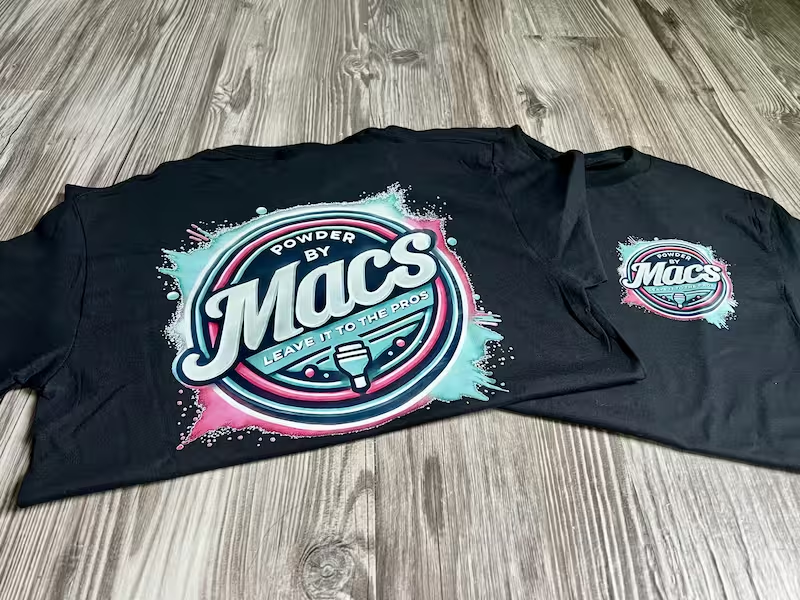
Do DTF transfers work on cotton? Yes. In fact, cotton is one of the most common fabrics used with Direct-to-Film transfers.
Whether you’re decorating a heavyweight 100% cotton T-shirt, a soft ring-spun tee, a cotton hoodie, a tote bag, or a cotton/polyester blend, DTF gives you a way to add detailed, full-color artwork without needing to screen print the design or limit yourself to polyester garments.
That’s one of the biggest reasons DTF has become so useful for apparel brands, small businesses, crafters, schools, sports teams, and anyone making custom shirts.
But getting a good result isn’t simply a matter of throwing a transfer onto any cotton shirt and closing the press.
The garment, transfer, temperature, pressure, moisture, seams, and pressing process can all affect your final result.
TL;DR: Can You Put DTF Transfers on Cotton?
Yes. DTF transfers work on 100% cotton and cotton blends. Unlike sublimation, DTF does not require a high-polyester garment because the printed transfer uses a heat-activated adhesive to bond the design to the surface of the fabric.
That means you can use DTF on many of the cotton T-shirts and hoodies already popular for custom apparel.
For Hollywood Prints DTF transfers, our current recommendation is to press at 320°F / 160°C with medium pressure for 15 seconds, allow the transfer to cool, and then peel. Always follow the instructions supplied with the specific transfers you’re using because DTF films and adhesive systems can vary.
Do DTF Transfers Work on Cotton? Yes, Very Well
Cotton and DTF are an excellent combination.
The key difference between DTF and a process such as sublimation is that the DTF ink does not need to chemically dye polyester fibers.
Instead, the design is first printed onto specialty transfer film. A powdered hot-melt adhesive is applied to the printed ink and cured. When you place the finished transfer on a garment and use a heat press, that adhesive layer helps bond the printed design to the fabric.
Because of that process, DTF is not dependent on cotton fibers absorbing the ink themselves.
This makes DTF useful on a much wider range of garments and gives decorators considerable freedom when selecting blanks.
The Simple Answer
If you have a standard 100% cotton T-shirt and want to apply a full-color DTF transfer to it, you absolutely can.
Why Do DTF Transfers Work So Well on Cotton?
Cotton is already one of the most widely used materials in casual apparel. T-shirts, sweatshirts, hoodies, tote bags, children’s clothing, and countless promotional products are available in cotton.
DTF complements that versatility because the transfer can reproduce:
- Full-color artwork
- White ink
- Small text
- Fine details
- Gradients
- Photographic artwork
- Logos with several colors
- Designs intended for light or dark garments
You also don’t need to weed individual vinyl layers for a detailed multicolor graphic. Once the transfer is ready, the complete design is positioned and pressed at once.
That’s particularly useful if you’re decorating dozens or hundreds of cotton shirts with the same design.
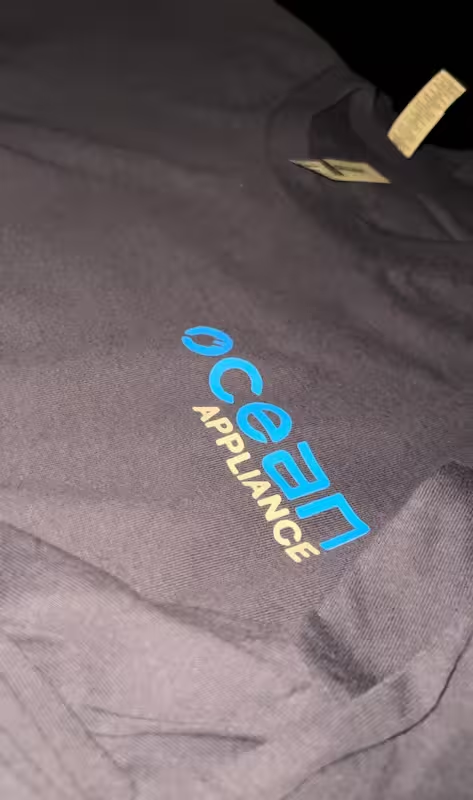
Can You Use DTF on 100% Cotton?
Yes. DTF on 100% cotton is one of the most common applications for Direct-to-Film transfers.
This includes many popular blank-garment styles such as:
- Standard cotton T-shirts
- Ring-spun cotton shirts
- Heavyweight cotton tees
- Garment-dyed shirts
- Cotton sweatshirts
- Cotton hoodies
- Cotton tote bags
- Cotton aprons
The actual fabric construction matters too. A smooth T-shirt surface is generally easier to decorate than extremely textured canvas, thick seams, or uneven garment areas.
Whenever possible, position the transfer on a flat portion of fabric where the heat press can provide even pressure across the complete design.
Do DTF Transfers Work on Cotton-Polyester Blends?
Yes. You aren’t limited to 100% cotton.
DTF is commonly used on cotton/polyester blends as well. That includes popular shirt constructions such as 50/50 cotton-poly blends and softer blended fashion shirts.
This is one of the practical advantages of DTF if you run an apparel business.
You can have one transfer design and potentially apply it across multiple compatible garment styles instead of needing a completely different decoration method every time the fabric composition changes.
Can DTF Be Used on Black or Dark Cotton Shirts?
Yes, and this is an area where DTF becomes especially useful.
DTF designs can contain a white ink underbase behind the color. That white layer helps keep artwork bright and visible instead of allowing the dark garment color to dramatically change the appearance of the design.
That means the same type of colorful graphic can be applied to:
- Black cotton shirts
- Navy shirts
- Red shirts
- Forest green shirts
- Pastel shirts
- White shirts
You aren’t restricted to white or extremely light-colored cotton in the same way you would be with standard dye-sublimation printing.
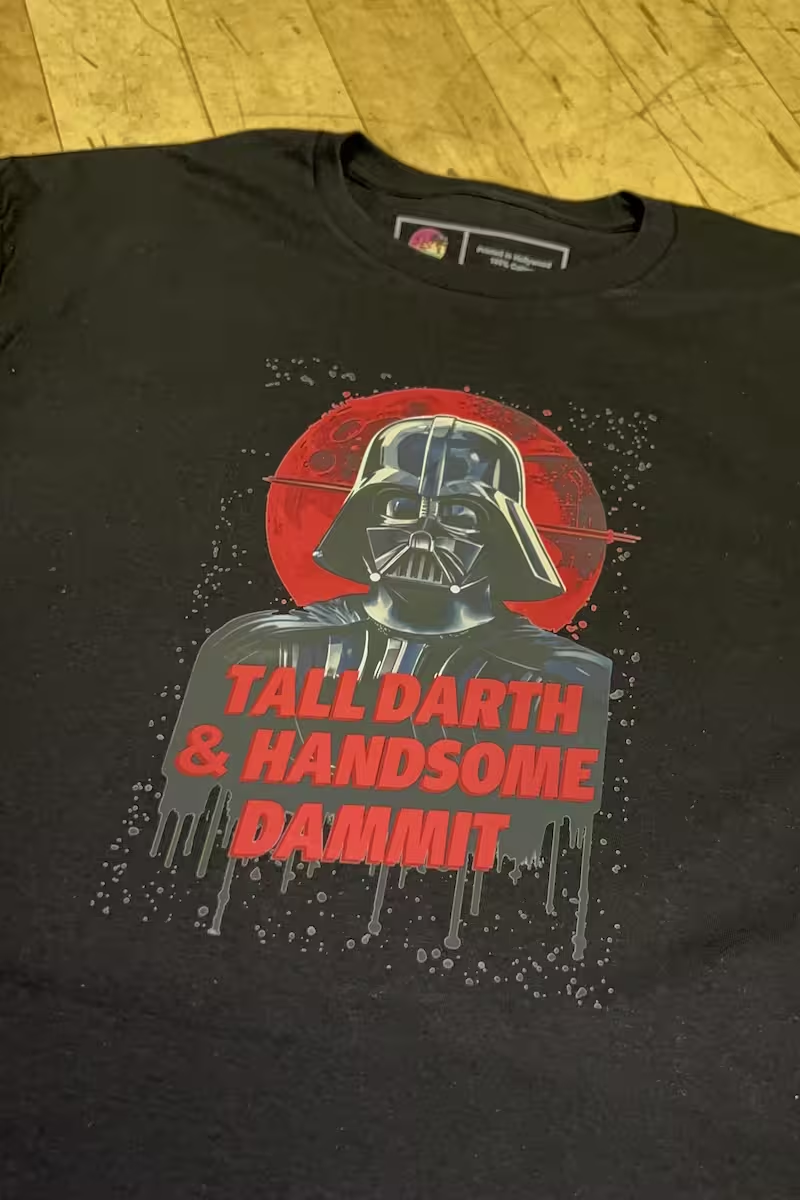
How to Press DTF Transfers on Cotton
Applying DTF to cotton is straightforward, but consistency matters.
Your first step should always be checking the instructions that came with your transfers. Different films, adhesives, and production systems can require different temperatures, times, pressures, and peel methods.
Hollywood Prints DTF Pressing Instructions
When applying Hollywood Prints DTF transfers to a standard compatible cotton garment, use the following as your starting point:
Prepare the Shirt
Place the cotton garment flat on the heat press. Make sure the print area is free from wrinkles, lint, seams, buttons, zippers, and other objects that could prevent even pressure.
Position the Transfer
Place the DTF transfer exactly where you want the design. Measure when necessary instead of relying entirely on your eye, especially when producing multiple shirts.
Press the Transfer
For Hollywood Prints transfers, press at 320°F / 160°C with medium pressure for 15 seconds unless your order includes different instructions.
Cool and Peel
Allow the transfer to cool before removing the film. Peel smoothly rather than aggressively ripping the carrier away from the garment.
Do You Need to Pre-Press Cotton Before Applying DTF?
A short pre-press can be useful when the garment contains wrinkles or moisture, but you should follow the instructions provided with the specific transfer you’re using.
Cotton can hold moisture from the surrounding environment. When that moisture is heated, steam can interfere with a predictable pressing process.
A brief pre-press can:
- Remove wrinkles from the print area
- Help release excess moisture
- Flatten the garment
- Give you a consistent surface for positioning
However, unnecessary or excessive heating can also shrink some cotton garments before the transfer is applied.
The goal is preparation, not cooking the shirt.
Common Mistakes When Applying DTF Transfers to Cotton
If your DTF transfer on cotton isn’t adhering properly, don’t automatically assume the transfer itself is defective.
Several simple application problems can produce similar symptoms.
1. Not Using Enough Pressure
A heat press doesn’t only provide temperature. It provides pressure.
If the transfer is barely touching the fabric, the adhesive may not make consistent contact across the entire design.
2. Pressing Over Seams
Thick collars, side seams, pockets, zippers, drawstrings, and other raised areas can prevent the platen from applying equal pressure.
A pressing pillow or smaller platen can sometimes help when decorating difficult garment locations.
3. Using the Wrong Temperature
Too little heat may prevent the adhesive from bonding correctly. Excessive heat can create different problems and may affect the garment itself.
Don’t simply use a temperature you saw in a random video. Use the instructions for the transfer you’re actually pressing.
4. Peeling at the Wrong Time
Hot-peel, warm-peel, and cold-peel films behave differently.
If your transfer is designed to be peeled cool and you immediately remove the carrier while it’s extremely hot, you may get poor results even though your temperature was correct.
5. Forgetting About Moisture
Cotton can absorb moisture. If your shirts have been stored in a humid room, warehouse, garage, or delivery box, moisture may be present even though the garment feels dry.
6. Using an Iron Without Consistent Pressure
A household iron can be difficult to use because the surface is small and maintaining identical heat and pressure over an entire graphic is challenging.
A proper heat press gives you considerably more control over temperature, time, and pressure.
DTF vs. Sublimation vs. HTV vs. DTG on Cotton
DTF isn’t the only way to decorate cotton. The best method depends on the artwork, quantity, garment, feel, equipment, and finished appearance you want.
| Printing Method | Works on 100% Cotton? | Full Color? | Dark Shirts? | Best Use |
|---|---|---|---|---|
| DTF Transfers | Yes | Yes | Yes | Detailed, full-color designs and flexible production quantities |
| DTG | Yes | Yes | Yes, with the appropriate white-ink workflow | Soft-feeling direct printing on suitable garments |
| HTV | Yes | Usually assembled from cut material or specialty printable vinyl | Yes | Names, numbers, simple logos and specialty finishes |
| Traditional Sublimation | Not ideal for untreated 100% cotton | Yes | Generally requires light-colored compatible substrates | Polyester garments and sublimation-ready products |
| Screen Printing | Yes | Yes, but each setup becomes more involved as colors increase | Yes | Large production runs and repeat designs |
Why DTF Is Different From Sublimation on Cotton
This is one of the most common points of confusion.
Traditional sublimation works by turning dye into a gas that bonds with compatible polyester material. That’s why a typical sublimation workflow strongly favors polyester and light-colored garments.
DTF works differently. The finished printed image is transferred from film and attached to the garment using a heat-activated adhesive layer.
Therefore, if you’re staring at a closet full of 100% cotton shirts and asking whether you need polyester before you can print them:
No, not if you’re using DTF.
What Cotton Shirts Are Best for DTF Transfers?
DTF can work across many cotton garments, but the easiest blanks to decorate tend to provide a relatively flat, consistent print surface.
Good candidates include:
- 100% ring-spun cotton tees
- Standard heavyweight cotton T-shirts
- Preshrunk cotton shirts
- Cotton-rich blends
- Flat cotton tote bags
- Sweatshirts and hoodies with a smooth printable area
Does Ring-Spun Cotton Work With DTF?
Yes. Ring-spun cotton is a popular choice for custom apparel because it typically has a smoother, softer surface than many basic open-end cotton fabrics.
A smoother fabric can also help a detailed transfer sit cleanly across the garment.
What About Heavyweight Cotton?
Heavyweight cotton tees can also work extremely well with DTF.
The most important consideration is still getting even contact between the transfer and garment during pressing.
Does the Color of the Cotton Shirt Matter?
Not nearly as much as it does with sublimation.
Because a properly prepared DTF transfer can include white behind the colored artwork, designs can remain visible on both light and dark garments.
That means one design can often be used across a range of shirt colors without completely rebuilding the artwork for each garment.
However, garment color can still influence your design decisions.
A black outline may disappear visually against a black shirt. A design containing large transparent areas will allow the shirt color to show through. Extremely thin details may also interact with the texture underneath.
So while DTF gives you considerable freedom, it’s still worth previewing the artwork against the shirt color before production.
Will DTF Feel Heavy on a Cotton Shirt?
It depends largely on the design.
A giant solid rectangle creates a much larger printed area than a logo containing open spaces and separated lettering.
If you want a lighter-feeling finished shirt, consider designing artwork with:
- Negative space
- Separated graphic elements
- Open lettering
- Intentional gaps in large backgrounds
- Smaller print dimensions where appropriate
Good artwork preparation can make a major difference in how a finished DTF shirt feels, particularly on lightweight cotton.
How Should You Wash a Cotton Shirt With a DTF Transfer?
Once you’ve successfully pressed the transfer, proper garment care helps protect both the shirt and design.
For Hollywood Prints transfers, we recommend:
- Turn the garment inside out before washing
- Wash in cold water
- Use mild detergent
- Avoid bleach and harsh chemicals
- Tumble dry on low heat or air dry
- Do not iron directly over the printed transfer
Excessive heat is unnecessary after the transfer has already been properly applied, so treating the shirt gently is the better approach for long-term wear.
Can You Make Your Own Cotton Shirts With Ready-to-Press DTF Transfers?
Absolutely.
You don’t need to own a DTF printer, maintain white ink, powder transfers, or operate a curing oven just to make custom cotton shirts.
That’s where ready-to-press transfers are useful.
You provide the artwork. We print the DTF transfer, apply the adhesive powder, cure it, and ship the completed transfer to you. You then apply it to your cotton garment with a heat press.
If you’re making several designs at once, you can also place multiple graphics together on a gang sheet and cut them apart before pressing.
Explore our custom DTF transfers or order custom full-color DTF transfers by size .
Is DTF a Good Choice for Selling Cotton T-Shirts?
It can be.
DTF is particularly appealing for small apparel brands because you can decorate different shirt colors and fabric blends without having to create a separate screen-printing setup for every small order.
It can also work well when:
- You offer several shirt colors
- Your artwork contains many colors
- You sell personalized apparel
- You produce small batches
- You need detailed graphics
- You don’t want to weed vinyl
- You want to keep blank shirts on hand and decorate them as orders arrive
For larger quantities and certain design styles, screen printing may still make sense. There isn’t one decoration method that’s automatically best for every order.
DTF’s advantage is flexibility.
Quick DTF on Cotton Troubleshooting Chart
| Problem | Possible Cause | What to Check |
|---|---|---|
| Transfer lifts when peeling | Incorrect heat, pressure, time, or peel temperature | Recheck your transfer supplier’s pressing instructions and make sure the entire design received even pressure. |
| Edges aren’t sticking | Uneven pressure | Look for collars, seams, pockets, or other raised areas beneath the platen. |
| Shirt looks damp after pressing | Moisture in cotton | Allow moisture to escape and consider a brief pre-press when appropriate. |
| Transfer feels too heavy | Large solid design | Use more negative space in future artwork. |
| Shirt shrinks around the design | Garment shrinkage or excessive heat exposure | Check the blank’s care instructions and avoid unnecessary repeated pressing. |
| Part of transfer didn’t adhere | Pressure obstruction or incorrect application | Make sure the garment is flat and you’re not pressing across a seam. |
Frequently Asked Questions About DTF Transfers on Cotton
Do DTF transfers work on 100% cotton?
Yes. DTF transfers work on 100% cotton and are commonly used to decorate cotton T-shirts, sweatshirts, hoodies, tote bags, and other garments. The transfer uses a heat-activated adhesive to bond the printed design to the fabric.
What temperature should I press DTF on cotton?
Follow the pressing instructions supplied with your specific transfer because DTF systems vary. Hollywood Prints currently recommends 320°F / 160°C with medium pressure for 15 seconds, followed by allowing the transfer to cool before peeling.
Can DTF transfers go on black cotton shirts?
Yes. DTF transfers can include a white ink underbase, allowing bright and colorful designs to remain visible on black and other dark-colored cotton garments.
Is DTF better on cotton or polyester?
DTF can work on both cotton and polyester, so neither fabric is automatically better for every project. Cotton is extremely popular for everyday T-shirts, while polyester is common in athletic and performance apparel. The best garment depends on the finished product you want to create.
Do I need to pretreat cotton before applying DTF?
Ready-to-press DTF transfers generally do not require the same garment pretreatment step associated with direct-to-garment printing. The DTF transfer already contains the adhesive system used to attach the printed design to the garment. Follow your transfer supplier’s application instructions.
Should I pre-press a cotton shirt before DTF?
A brief pre-press can help flatten wrinkles and remove excess moisture when necessary. However, follow your transfer and garment instructions and avoid excessive pre-heating that could unnecessarily shrink or damage the shirt.
Can I use DTF on cotton hoodies?
Yes. DTF can work very well on cotton and cotton-blend hoodies. The main challenge is making sure the print area is flat and that thick seams, pockets, drawstrings, or zippers do not interfere with pressure from the heat press.
Can you use DTF on cotton tote bags?
Yes, many cotton tote bags can be decorated with DTF transfers. Check the bag’s material and construction first, and make sure handles, seams, or internal layers do not prevent the heat press from applying even pressure.
Why is my DTF transfer not sticking to cotton?
Common causes include insufficient heat, insufficient pressure, incorrect press time, peeling at the wrong temperature, moisture in the garment, or pressing across raised seams. Start by confirming the exact instructions for your transfers and verifying that your heat press is applying consistent heat and pressure.
Does DTF on cotton last after washing?
A properly produced and applied DTF transfer is designed for repeated wear and washing. Follow the transfer supplier’s application instructions and garment-care recommendations, including washing inside out and avoiding excessive heat when recommended.
Can I use an iron to apply DTF transfers to cotton?
Some people attempt DTF application with household irons, but consistent results are harder to achieve because an iron does not provide the same controlled pressure and uniform heated surface as a heat press. A heat press is the preferred option for reliable application.
Final Answer: Do DTF Transfers Work on Cotton?
Yes, DTF transfers work on cotton including 100% cotton shirts.
That’s one of the biggest advantages of Direct-to-Film printing. You aren’t locked into polyester garments, a single shirt color, or simple one-color artwork.
With a properly produced transfer and the correct heat-press settings, you can decorate cotton shirts with bright colors, white ink, fine details, photographs, logos, gradients, and complex artwork.
Just remember that good results depend on more than fabric content. Use a suitable garment, keep the pressing area flat, follow the correct temperature and pressure instructions, peel at the proper time, and care for the finished shirt correctly.
If you already have cotton blanks and have been wondering whether you need to replace them before trying DTF:
You don’t. Cotton and DTF work great together.

There are 2 comments
As someone making shirts for customers, I’m always testing different blanks and fabric blends. I liked that this covered 100% cotton as well as cotton/poly blends and dark shirts. There are a few details in here I’m going to pay closer attention to on my next batch, especially pre-pressing and making sure I’m getting even pressure. Definitely going to let my customers know to check this post out when they have some questions or doubts.
I’ve ordered DTF transfers from Hollywood Prints before and have used them on cotton tees with great results. Following the recommended press settings and letting the transfer cool before peeling made a big difference for me. Nice to have all of this information together in one guide.