
Wrestling asks a lot from your knees. Shots, sprawls, scrambles, knee slides, finishes, mat returns and hours of drilling can put your legs through repeated impact and awkward positions. Whether you’re a beginner learning your first double-leg or an experienced wrestler spending most weekends at tournaments, thinking about wrestling knee protection before your knees start hurting is a smart move.
Knee protection isn’t simply about buying the thickest wrestling knee pads you can find. The right clothing, properly fitted equipment, strength and mobility, good wrestling technique and knowing when an existing injury needs professional attention all work together.
Below, we’ll break down five practical ways wrestlers and wrestling parents can help protect the knees while keeping mobility, comfort and performance in mind.
The best approach to wrestling knee protection combines several things: wear properly fitting wrestling gear, choose a knee pad that stays secure without restricting movement, use a brace only when appropriate for your individual situation, strengthen and warm up the muscles supporting the knee, and develop sound wrestling technique. Youth wrestlers should prioritize fit and freedom of movement rather than simply choosing the biggest pad available.
Why Knee Protection Matters in Wrestling
Knees play a role in almost every wrestling position. A wrestler may repeatedly drop to the lead knee while attacking, drive from the mat while finishing a takedown, pivot during a scramble and absorb pressure while defending.
That doesn’t mean every wrestler is destined for a knee injury. It does mean wrestlers should pay attention to the combination of impact, repetitive stress, strength, mobility and technique.
Proper protection can also make wrestling more comfortable. A wrestler who isn’t worried about banging a sore knee into the mat may be more willing to commit to attacks and drill at game speed.
1 Choose the Right Wrestling Gear
Knee protection starts before you ever put on a knee pad. Wrestling clothing should allow the athlete to move naturally without constantly bunching around the knees, pulling at the legs or interfering with stance and motion.
Types of Wrestling Clothes
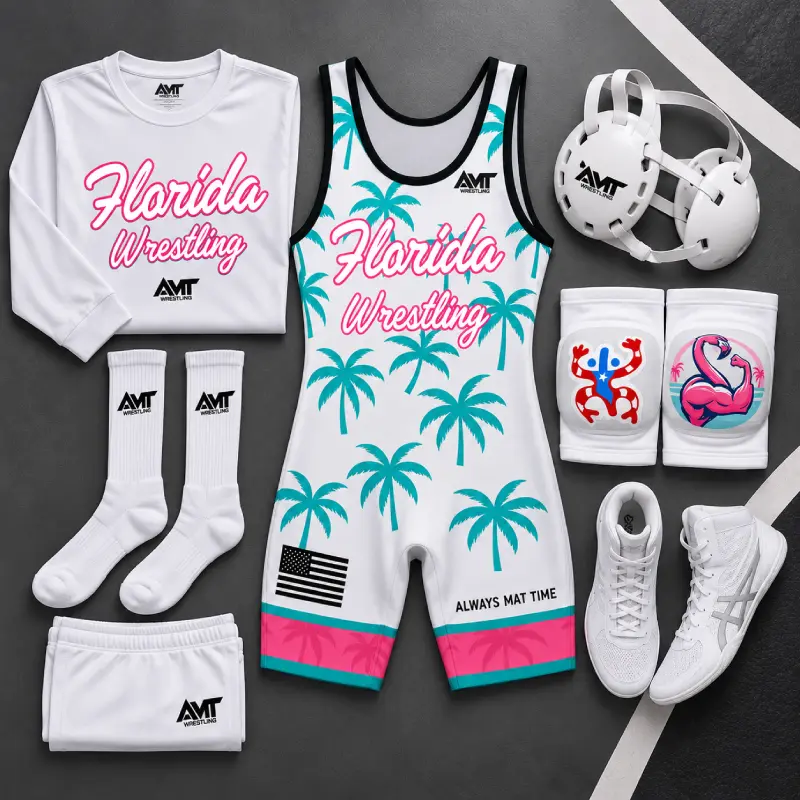
Depending on whether you’re training, warming up or competing, a wrestler’s clothing may include singlets, compression shirts, fight shorts, tights, performance shirts, hoodies and practice T-shirts.
For practice apparel, prioritize clothing that lets the hips and knees move through a full wrestling stance. Excessively loose pants or heavy materials can become distracting during shots and scrambles.
Wrestlers looking for something to wear before practice, during travel or around tournaments can also explore Hollywood Prints’ AMT Wrestling apparel or browse our custom printed T-shirts.
Importance of Quality Materials
Wrestling rooms get hot quickly. Breathable, flexible materials can help athletes remain more comfortable through warmups, drilling and conditioning.
Look for apparel that:
- Allows unrestricted knee and hip movement
- Doesn’t constantly bunch behind the knee
- Handles repeated washing well
- Fits securely during fast movement
- Feels comfortable against the skin during long practices
Teams and wrestling clubs that want coordinated practice shirts, warmups or tournament apparel can also use custom DTF transfers from Hollywood Prints to create full-color team designs without the limitations associated with simpler one-color graphics.
2 Invest in Quality Wrestling Knee Pads
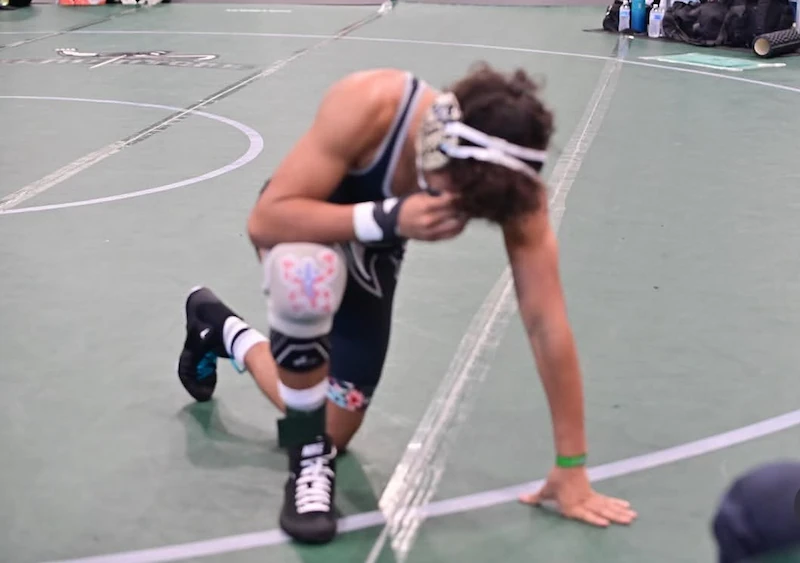
For wrestlers who spend a lot of time attacking from their knees, a quality wrestling knee pad can be one of the most useful pieces of protective gear in the bag.
A knee pad primarily helps cushion direct impact and friction against the mat. That’s especially useful for wrestlers who frequently hit penetration steps, knee-slide finishes or scramble from positions where the kneecap regularly contacts the mat.
Features to Look for in Wrestling Knee Pads
Don’t choose a knee pad based only on how thick it looks. The best wrestling knee pad is one that provides enough protection while remaining secure and flexible.
- Secure fit: It shouldn’t repeatedly slide down during drilling.
- Impact padding: Padding should cover the area that normally contacts the mat.
- Mobility: You should still be able to bend your knee comfortably into a wrestling stance.
- Low-profile design: Excessively bulky equipment can interfere with movement.
- Comfortable interior: Rough seams and poorly placed edges can become irritating during long practices.
- Durability: Wrestling equipment gets stretched, sweated in and washed frequently.
Want a Knee Pad That Actually Looks Like Yours?
Hollywood Prints offers a fully customizable wrestling knee pad through our collaboration with Always Mat Time Wrestling. Add a school logo, team identity, future college, wrestler name or your own artwork while getting padding built for the mat.
Customize a Wrestling Knee PadYouth Wrestling Knee Pads: What Parents Should Consider
When shopping for youth wrestling knee pads, fit becomes especially important. Buying an oversized knee pad with the idea that a young wrestler will “grow into it” can backfire if the pad rotates or slides every time the wrestler shoots.
Have your wrestler move in it before relying on it for competition. They should be able to:
- Get into their normal stance
- Perform a penetration step
- Sprawl comfortably
- Stand back up quickly
- Bend and straighten the knee without pinching
If the wrestler spends half the match pulling the pad back into position, the fit probably isn’t right.

3 Know When a Wrestling Knee Brace Makes Sense
Knee pads and knee braces are not the same thing.
A wrestling knee pad is primarily intended to cushion the knee from direct contact with the mat. A wrestling knee brace is generally designed to provide a particular type of joint support, often in response to an existing injury, previous injury or medical recommendation.
Potential Benefits of a Knee Brace
Depending on the design and the individual athlete, a brace may be used to provide compression, limit certain movements or support a knee during rehabilitation and return to activity.
However, wrestlers shouldn’t assume that simply wearing a brace will prevent a major knee injury. The American Academy of Orthopaedic Surgeons notes that knee braces have not been shown to reduce ACL injury rates by themselves. Strength, neuromuscular control and proper movement remain important parts of injury prevention.
You can read more from the American Academy of Orthopaedic Surgeons .
When Should a Wrestler Wear a Knee Brace?
If you’re considering a brace because of ongoing pain, instability, swelling or a previous knee injury, speak with a qualified healthcare professional, athletic trainer or physical therapist who can evaluate your specific situation.
Competition equipment rules can also change between wrestling organizations and seasons. Wrestlers should make sure any brace, pad or special equipment complies with their governing organization’s current requirements before competition.
4 Incorporate Additional Wrestling Accessories
A knee pad may get most of the attention, but knee protection is part of a larger wrestling setup.
Useful Wrestling Accessories for Knee Protection
Depending on the athlete, useful additions can include:
- Knee pads for mat impact
- Compression tights or leg sleeves for comfort
- Properly fitted wrestling shoes for reliable mat traction
- Clean practice clothing that allows unrestricted movement
- A dedicated gear bag so pads and apparel can be cleaned regularly
- A reusable water bottle to stay prepared through long practices and tournaments
Remember that more gear is not automatically better. Wrestling equipment should serve a purpose without restricting the athlete’s movement.
Recommended Wrestling Products
For wrestlers who like their equipment to represent their team, personality or wrestling journey, personalized gear can add something different to a tournament setup.
Hollywood Prints lets wrestlers create a custom wrestling knee pad, browse custom apparel and accessories, or order custom DTF transfers for team shirts, wrestling club apparel and tournament gear.
DTF transfers can be especially useful for coaches, clubs and wrestling parents who already own a heat press and want to produce their own shirts, hoodies or warmup apparel.
5 Practice Proper Wrestling Technique
Protective equipment matters, but one of the most important things a wrestler can develop can’t be purchased: good movement mechanics and technique.
Why Technique Matters for Injury Prevention
Wrestling is performed under resistance, which means even a simple movement changes when an opponent is pushing, pulling or scrambling against you.
Athletes should learn how to perform common movements correctly before adding maximum speed and resistance. That includes penetration steps, finishes, sprawls, stand-ups, mat returns and scrambling positions.
Strengthening the muscles supporting the knee can also help athletes control movement. AAOS guidance notes that strengthening the muscles around the knee can reduce stress on the joint, while flexibility helps maintain useful range of motion.
Tips for Improving Wrestling Technique
- Master your penetration step. Focus on controlled positioning instead of crashing straight down onto the kneecap.
- Build hip and leg strength. Strong glutes, quadriceps and hamstrings help support wrestling movement.
- Warm up before hard drilling. Prepare the body before explosive movements.
- Train balance and body control. Wrestling constantly requires the athlete to react while off-balance.
- Learn positions before increasing intensity. Speed should come after the wrestler understands the movement.
- Listen to your coaches. Small corrections in stance, footwork or positioning can improve both performance and movement efficiency.
- Don’t ignore persistent pain. Pain that continues, swelling, instability or a significant injury deserves professional evaluation.
Wrestling Knee Protection: Quick Comparison
| Option | Main Purpose | Best For | Important Consideration |
|---|---|---|---|
| Wrestling Knee Pad | Cushioning direct mat impact and friction | Shots, knee slides, drilling and repeated mat contact | Must fit securely without restricting movement |
| Knee Sleeve | Compression and light coverage | Wrestlers who prefer a low-profile feel | Usually provides less impact padding than a true knee pad |
| Knee Brace | Specific joint support depending on brace design | Often used after injury or under professional guidance | Shouldn’t be viewed as guaranteed injury prevention |
| Strength & Technique | Improve control, movement and joint support | Every wrestler | Requires consistent training rather than a one-time purchase |
Protect Your Knees So You Can Keep Wrestling
Wrestling is a demanding sport, and protecting your knees is about much more than putting on a pad five minutes before a match.
Start with properly fitting wrestling clothing. Choose a knee pad that protects the areas where you make contact with the mat. Treat knee braces as specialized support rather than a universal solution. Build strength and mobility. Most importantly, keep developing the technique that lets you move confidently and efficiently.
For younger wrestlers, parents should pay especially close attention to fit. A comfortable youth wrestling knee pad that stays where it belongs can be far more useful than an oversized, heavily padded option that moves every time the athlete shoots.
Take care of your knees during practice, not only on tournament day. The more consistently you build good habits, the better prepared you’ll be for the countless shots, sprawls and scrambles ahead.
Make Your Wrestling Gear Your Own
Your wrestling gear doesn’t have to look like everybody else’s. Create a custom wrestling knee pad with your team logo, school, future college, personal design or explore custom apparel made for the wrestling community.
Customize a Knee Pad Shop Hollywood PrintsFrequently Asked Questions About Wrestling Knee Protection
Should wrestlers wear knee pads?
Not every wrestler wears a knee pad, but many find them useful for cushioning repeated contact with the mat during shots, drilling and scrambling. Whether you need one depends on comfort, wrestling style and individual needs.
What type of knee pad is best for wrestling?
A good wrestling knee pad should fit snugly, remain in position during movement, cushion the front of the knee and allow the knee to bend freely. The biggest or thickest knee pad isn’t automatically the best choice.
How tight should a wrestling knee pad be?
It should be secure enough that it doesn’t constantly slide or rotate, but it shouldn’t cause numbness, significant pinching or restrict normal knee movement. Always follow the manufacturer’s sizing recommendations.
Are wrestling knee pads good for youth wrestlers?
They can be. Youth wrestlers who frequently make hard contact with the mat may appreciate the extra cushioning. Proper sizing is especially important because an oversized pad may slide during wrestling.
Can a knee pad prevent wrestling knee injuries?
A knee pad can cushion direct impact and reduce friction against the mat, but it cannot prevent every type of knee injury. Strength, conditioning, technique and appropriate medical care are also important.
Is a knee sleeve the same as a wrestling knee pad?
No. A sleeve is typically thinner and primarily provides compression or coverage, while a wrestling knee pad contains additional padding intended to cushion direct contact with the mat.
Should wrestlers wear a knee brace?
A knee brace may be appropriate for certain athletes, particularly after an injury or when recommended by a healthcare professional. Wrestlers shouldn’t assume a brace automatically prevents knee injuries, and competition rules should be checked before using one.
Can you customize wrestling knee pads?
Yes. Hollywood Prints offers a customizable wrestling knee pad that can feature a team logo, school identity, personal artwork or other custom design.
What other wrestling gear should a beginner have?
Common wrestling essentials include properly fitting wrestling shoes, approved headgear, practice apparel, competition uniforms, a water bottle and any appropriate protective equipment such as a knee pad. Exact requirements vary by program and wrestling organization.
How can wrestling teams make custom practice shirts?
Teams can order finished custom apparel or use custom DTF transfers from Hollywood Prints . DTF transfers allow full-color logos, wrestler graphics, team names and detailed designs to be applied to many popular apparel fabrics.
Disclaimer: This article is provided for general educational information and is not medical advice. Athletes experiencing knee pain, swelling, instability, loss of motion or a suspected injury should consult an appropriate healthcare professional. Wrestling equipment and competition rules may vary by governing body, state association, age division and season.

There are 3 comments
As a wrestling mom, I wish I had read something like this when my son first started. We went through a couple knee pads before finding one that actually stayed in place and didn’t bother him during shots. Definitely agree that fit matters way more than just getting the thickest pad.
I agree that these are a great option as they are so basically form fitting for wrestlers. My daughter’s coach is always reminding the kids not to just slam their knee into the mat when they shoot. Good gear helps, but learning how to move correctly makes such a difference too. Great article for newer wrestling parents!
This was really helpful! My son is in youth wrestling and always complains about his knees after long practices. I just checked out the custom knee pads and those are such a cool idea. I love that you can actually put their school logo or name on them instead of having the same plain white or black knee pad everyone else has.